Frequently Asked Questions
Your Questions, Answered
Who We Work With
What size organizations do you work with?
We typically work with 501(c)(3) nonprofits with annual budgets between $150K and $10M, especially those pursuing both foundation grants and federal, state, or county awards.
What sectors do you specialize in?
Four, mostly:
Affordable housing and homelessness. Shelters, interim and transitional housing providers, affordable housing developers, and the outreach teams.
Health and human services. Clinics, behavioral health providers, food and basic needs organizations, and the case management teams holding it all together.
Youth sports and mentorship. Leagues, after-school and PE replacement programs, as well as mentoring organizations building consistency and adult connections for young people.
Entrepreneurship and workforce development. Small business support organizations, job training providers, and workforce development programs.
Many of our clients sit at the intersection of two or three of these, which is where funding calendars, outcome tracking, narratives, and budgets can get complicated.
What geographic areas do you serve?
We serve nonprofits throughout North America, with concentrated funder landscape expertise in Colorado and California. We do not work directly with international nonprofits at this time, but we can connect you with a trusted referral partner who specializes in global organizations.
What This Costs
How much do grant writing services cost?
We work primarily on a monthly retainer model, which covers ongoing prospect research, submission calendar management, capacity building, writing and submission, and more.
How does a retainer compare to hiring a development director?
A development director in 2026 costs $105k–$120k in salary, and the true number climbs once you add in benefits, payroll taxes, recruiting, and onboarding. That hire also needs three to six months to reach full productivity, and government grant expertise is something that organizations can rarely find.
What a retainer buys in the meantime is the applications going out now, on a budget where a six-figure hire is not on the table this year or next.
Do you work on commission?
No. Here is why that matters:
It violates professional ethics. Commission-based payment conflicts with the standards of the Grant Professionals Association and the AFP Code of Ethics. Commission arrangements also typically contradict the budgets proposed to grantmakers, which creates compliance exposure and damages your credibility with funders.
You're paying for expertise, not a guaranteed outcome. Award decisions are shaped by funder priorities, existing relationships, competition, and available funding levels - none of which any writer controls.
It's unsustainable for qualified professionals. If a grant isn't funded, a commission-based writer receives nothing despite significant invested time. That model drives experienced people out of the field.
What's included in a retainer?
Funder research and prospect qualification, full proposal development (narratives, budgets, attachments), submission management, deadline tracking across your portfolio, and post-award reporting support. Capacity work - program budgets built from scratch, logic models, pilot program design, annual report updates, and internal proprietary documents to keep you organized.
How many revisions are included?
We do three full rounds of edits on every application. Whether you want a hands-on process or prefer us to take the lead, the goal is the same: your organization's outcomes and approach will come through clearly while every funder requirement is addressed.
How We Work
What does a grant writer actually do now?
Less writing than the title suggests. Today, the grant writer role encompasses funding strategy, portfolio management, funder relationship cultivation, working with teams to build the internal data infrastructure, persuasive positioning support, and more. A good grant writer should ask you hard questions and push you to strengthen your programs - not just describe them favorably.
What makes your approach different?
In addition to our great track record, we don't just submit applications to every open opportunity because "we should." We pursue only genuine matches, using Instrumentl, Grant Station, and nonprofit competitor research, then build the strongest possible narrative, budget, and supporting documents for each.
Most grants require substantial work beyond building the narrative part of an application: building a program budget from scratch, designing a pilot that so far exists only in theory, updating an annual report the funder requires. We call that strengthening capacity and infrastructure, and it's built into everything we do rather than sold separately.
Because every grantmaker requires a distinct angle and its own combination of narrative, budget, and attachments, we build each submission from the ground up rather than recycling a boilerplate template.
Do you work on collaborative or multi-organization applications?
Yes, and increasingly so! Funders are rewarding consortia and collective-impact models that deliver cross-sector solutions rather than single organizations working alone.
Collaborative proposals demand more upfront planning: shared metrics, governance agreements, coordination structures. We can help build those frameworks as well as write the resulting application.
Readiness, Data, and Compliance
How do we know if we're ready to pursue more competitive funding?
Grant readiness is not just about having a 501(c)(3) letter.
The real questions are:
Can you show what changed for the people you serve, not just how many you served?
If an award is cost-reimbursement, can you cover 60-90 days of program expenses before the first drawdown clears - and again after every invoice?
Would your financial systems survive an audit tomorrow?
Who actually does the grant management work - the drawdowns, the financial reports, the performance reporting? If the answer is your executive director at 11pm, that capacity is theoretical.
What's your answer when a reviewer asks why you can handle an award larger than anything you've managed before?
Do your partnerships have dollars and deliverables attached - signed agreements with defined roles and budget lines, not letters of support?
If you're pursuing federal awards, is your SAM.gov registration active, and is the right person designated to submit on your behalf?
Do we need a strategic plan before applying?
Not always. Smaller funders rarely ask. Larger institutional funders want evidence of organizational direction, which a strategic plan provides but is not the only way to show. We can work with what you have and build toward the rest.
What are in-kind donations and why pursue them?
Non-cash contributions - equipment, professional services, software, venue space, supplies. Pro bono legal work or donated catering can free your real budget for programs. In-kind support also strengthens applications by demonstrating community investment, and can help satisfy match requirements on federal awards.
How is a sponsorship different from a grant?
A sponsorship is a business exchange: a company provides funding or in-kind support and receives brand visibility or audience access in return. A grant is philanthropic, with no commercial return expected.
Both are legitimate revenue, but they require different pitches - sponsorship packages articulate value to the sponsor's brand, while grant proposals demonstrate impact for the community.
What do you need from us each month?
Program numbers, a review pass on drafts, and a signature. Roughly two to four hours of your time in a normal month. If your documents are scattered, the first month is heavier while we get them into one place, and then it gets lighter permanently.
The Nonprofit Funding Landscape
What types of grantors are there?
Private foundations - Established by individuals, families, or corporations for specific charitable purposes
Community foundations - Focused on defined geographic areas and local needs
Corporate foundations and giving programs - Funded by businesses, often aligned with CSR goals
Government agencies - Federal, state, and local, offering grants for public benefit programs
Public charities - Nonprofits that redistribute funds to other organizations
Donor-advised funds - Charitable accounts managed by individuals through a sponsoring organization
Each carries distinct priorities, processes, and post-award expectations.
Are there grants available for nonprofits in Colorado?
Yes! Colorado has a strong philanthropic ecosystem: the Colorado Health Foundation, Anschutz Foundation, Boettcher Foundation, and Denver Foundation, alongside state programs through DOLA, federal funding via Grants.gov, and national foundations funding across the western U.S. Corporate giving from Colorado-headquartered companies remains underused.
For housing and homelessness organizations, the more consequential map is the jurisdictional one - which CoC you sit in, which entitlement jurisdiction administers your CDBG and HOME dollars, and how those dates interact.
Are there grants available for nonprofits in California?
Yes! California has one of the largest and most diverse grant landscapes in the country: the California Community Foundation, the California Endowment, the Weingart Foundation, hundreds of private foundations, and substantial state and federal streams. Southern California in particular has a dense concentration of corporate, foundation, and government funders.
What is the typical timeline for receiving a grant?
Every grantmaker differs, and two separate clocks matter: how long until a decision, and how long until money actually reaches your account.
Foundation grants: 2-9 months to a decision. Funds usually follow within 30-60 days of the award letter. Small funders with rolling deadlines can move much faster; processes with an LOI round followed by a full proposal run longer.
Government grants: 4-12 months to award notification, with disbursement a separate step after that. Most federal and state awards pay on a reimbursement basis - you spend first and are repaid on a 30-60 day cycle - so budget for the cash flow gap, not just the wait.
Government contracts: these follow procurement rules rather than grant cycles, so timelines vary widely. Payment is nearly always reimbursement-based.
Corporate grants and sponsorships: 1-6 months to a decision, with payment typically quick once approved. Sponsorships tied to an event date tend to move fastest.
If a funder's timeline isn't published, we can contact them on your behalf or estimate from experience.
Ready to talk?
Contact us at info@fscollab.com.
-
![PHX Dollhouse - https://www.phxdollhouse.org/]()
Jenna Hubaishy
"The Funding & Strategy Collaborative provided valuable guidance during the formation of PHX Doll House. They walked us through the capacity building process, providing templates, and supporting us in building the operational framework necessary for our organization's success.
With their support, PHX Doll House has evolved into a sustainable organization effectively serving over 550 children throughout the Phoenix metropolitan area in its first year of operation. I highly recommend their services to any nonprofit leader seeking to build a strong organizational foundation."
- Founder & Executive Director, PHX Doll House
-
![Nonprofit youth coaching services]()
Coach Paul LeDoux
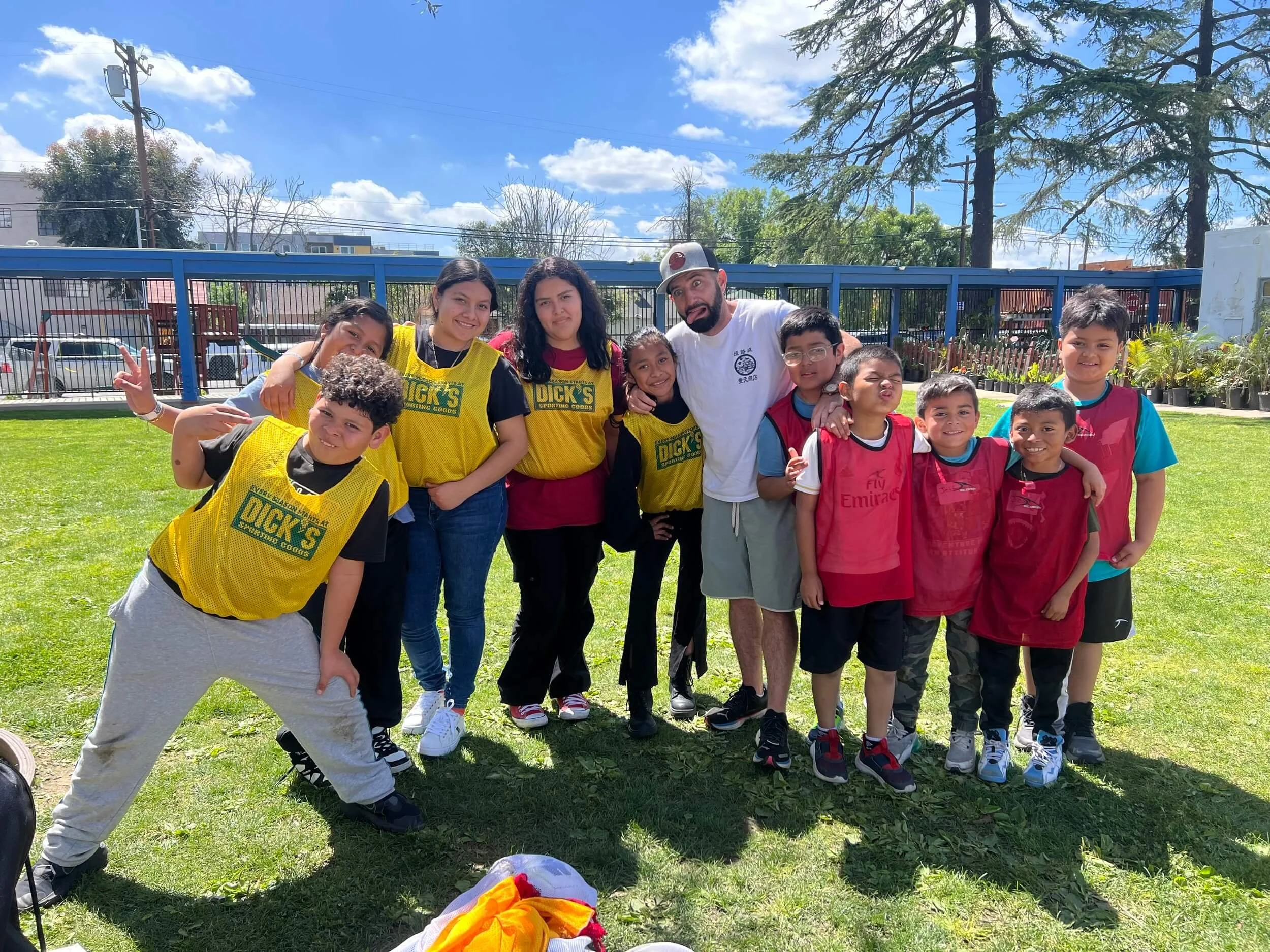
“Over the past year, she secured over $450,000 in grant funding, going far beyond the typical 3X return on investment (ROI) for nonprofit consultants. Alex's skill in grant writing and post-award management hasn’t just brought in vital funds; it's also helped us streamline our operations and strengthen our overall capacity.”
- Executive Director, Better Today, Better Tomorrow
-
![Coffee accessibility nonprofit]()
Keith Hawkins
"Working with Alex on grants for COCC was a great experience. She refined our narratives and budgets and helped us secure two important grants. Her commitment to win-win solutions and her transparent, affordable approach really set her apart."
-
![Brandi Asacker, Beyond the Barracks - https://beyondthebarracks.org/who-we-are/]()
Brandi A.
“Alex is outstanding at what she does. She takes the time to truly understand every aspect of our nonprofit. She is extremely thorough, professional, and very knowledgeable. I highly recommend Alex for your next Grant opportunity!”
- Founder & Executive Director, Beyond the Barracks
-
![Dr. Mary Welsh, nonprofit founder]()
Dr Mary Welsh
"Alex is a servant leader who consistently delivers results for her nonprofit clients. She demonstrates remarkable grant strategy and commitment to supporting vulnerable communities. Her statistics over the past two years resulted in $7.45 million in funding for early-stage organizations, contact her for a conversation..."
- President, Susie Q's Kids, Inc.
-
![A woman with curly dark hair wearing a white shirt, smiling gently outdoors.]()
Ms. Salinas
"Alex is a master at her strategy and grant work. She can get our businesses to the next level with her extensive funding know-how."
- Executive Director, Alternative Housing Alliance
-
![Mary Lou, Nonprofit Leader, Former grant lead at Joni and Friends]()
Mary Lou Gilliland
"Alex is smart and brings a fresh perspective to grants management and writing. She quickly grasped the nuances of our services and provided insightful solutions to secure more funding. I have worked with many grant writers and was immediately impressed with Alex’s understanding of fundraising challenges for faith-based organizations. Her research using databases like Instrumentl helped prioritize foundation prospects and created a clear path forward. I'm certain these efforts will yield positive results and will gladly hire her again at a my next nonprofit!"
- Principal & Owner, Mary Lou Gilliland Consulting
-
![Logo for Rapha Christian Counseling Center]()
Dr. Janet
“When looking for grants contact Alexandra. She is impressive and has great knowledge in this area.”
- Founder & Owner, Rapha Christian Counseling Center
-
![Robelle Salvador, CEO of The Sacred Sunflower]()
Robelle Salvador
"Working with Alex on my Sacred Sunflower business plan was a true pleasure. She is heart centered, empathic, and passionate about her work. Alex is able to meet you with where you are at and attune to your vision and mission. Her expertise and valuable insights were perfectly aligned with the needs of my service-based, solopreneur business. Highly recommend!"
- CEO, Sacred Sunflower